


Stone has been one of humanity’s most important construction and decorative materials for thousands of years. From ancient temples and monuments to modern luxury kitchens, commercial buildings, and architectural façades, natural and engineered stone continues to play a central role in construction and design. Yet while stone itself may appear timeless, the methods used to process it have undergone a dramatic transformation.
Modern stone fabrication bears little resemblance to the manual craftsmanship that dominated the industry for centuries. Today’s manufacturers operate in an environment where precision, efficiency, customization, and production speed are essential competitive advantages. The increasing popularity of quartz countertops, sintered stone surfaces, large-format porcelain slabs, and customized architectural stone products has further accelerated the adoption of advanced fabrication technologies.
As a result, stone processing is no longer defined by a single manufacturing method. Instead, modern stone factories rely on multiple complementary technologies, each optimized for specific stages of production. Waterjet cutting machines, bridge saws, CNC machining centers, polishing lines, edge processing equipment, profiling systems, and automated handling solutions all contribute to transforming raw slabs into finished products.
Understanding the differences between these stone processing methods is critical not only for manufacturers but also for architects, project managers, fabricators, and investors seeking to optimize production quality and profitability. The question is no longer which method is best. The real challenge lies in understanding where each technology creates value and how different processes can work together to maximize efficiency and product quality.
The Evolution of Stone Processing Technology
The history of stone fabrication reflects the broader evolution of manufacturing itself. Early stone processing relied almost entirely on manual labor. Craftsmen shaped granite, marble, and limestone using hand tools, creating remarkable structures that still stand today. However, these traditional methods were slow, labor-intensive, and highly dependent on individual skill.
The introduction of mechanical saws and diamond tooling transformed the industry by increasing productivity and consistency. Large blocks could be cut into slabs more efficiently, reducing material waste and enabling larger-scale production. Yet even these advances were limited by the physical constraints of mechanical cutting.
The emergence of CNC technology, waterjet cutting systems, and digital design software fundamentally changed the economics of stone fabrication. Modern manufacturers can now process complex geometries, intricate decorative patterns, and highly customized designs with a level of precision that would have been unimaginable only a few decades ago.
Today, stone processing is increasingly integrated into digital manufacturing ecosystems where CAD software, production management systems, and automated machinery operate together to create highly efficient workflows.
Bridge Saw Processing: The Foundation of Modern Stone Fabrication
Despite the emergence of advanced technologies, bridge saws remain one of the most widely used stone processing systems in the world.
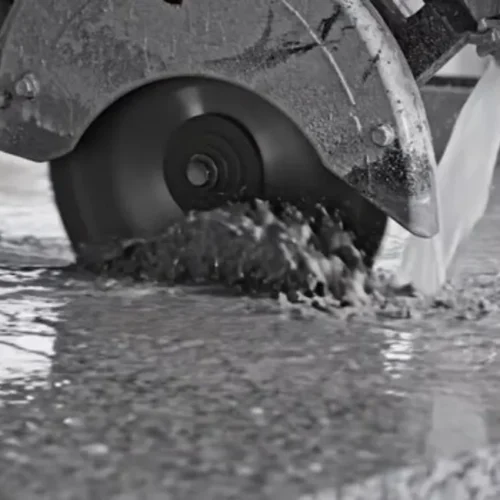
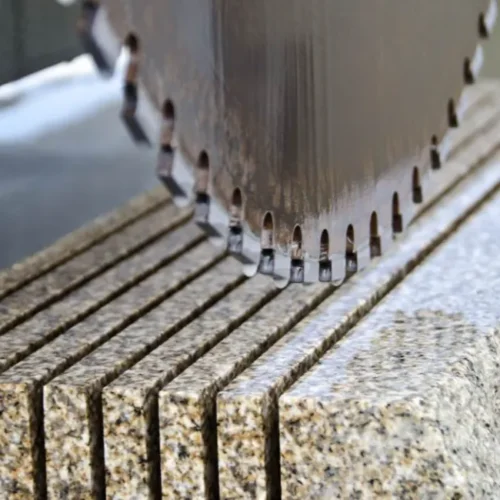
A bridge saw is primarily designed for straight-line cutting and slab sizing. Using a rotating diamond blade, the machine cuts stone slabs into manageable dimensions for further processing. For many fabrication shops, the bridge saw represents the first stage of production after slab selection.
The primary advantage of bridge saw technology lies in its simplicity and productivity. Straight cuts can be performed quickly and economically, making bridge saws ideal for basic countertop production, slab division, and general fabrication work.
However, bridge saws have significant limitations when compared to newer technologies. Curved shapes, intricate internal cutouts, and complex geometries are difficult or impossible to produce efficiently. While advanced five-axis bridge saws have expanded capabilities considerably, they still remain primarily optimized for linear cutting operations.
As customization becomes increasingly important in the stone market, bridge saws often serve as part of a broader manufacturing workflow rather than a complete fabrication solution.
Waterjet Cutting: Precision Without Compromise
Among all modern stone processing technologies, waterjet cutting has arguably had the greatest impact on design flexibility.
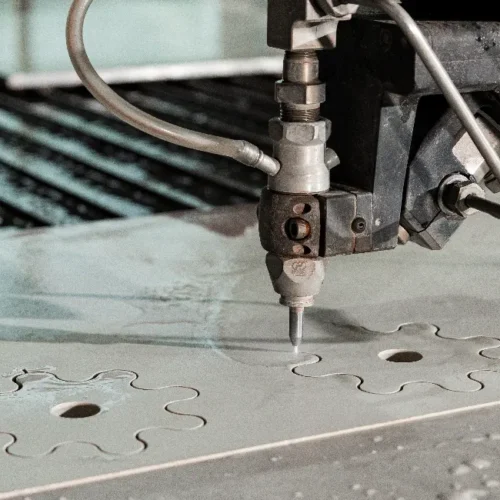
A waterjet cutting machine uses an ultra-high-pressure stream of water combined with abrasive particles to erode material. Unlike mechanical cutting systems, waterjet technology generates virtually no heat and applies minimal mechanical stress to the stone.
This characteristic is particularly important when processing brittle materials such as marble, quartz, glass, and sintered stone. Traditional cutting methods can introduce vibration, thermal stress, or microfractures that compromise material integrity. Waterjet cutting largely eliminates these risks.
One of the most significant advantages of waterjet technology is its ability to produce complex geometries with exceptional precision. Curves, decorative inlays, intricate mosaics, sink openings, faucet holes, and artistic patterns can be created directly from digital designs.
For architectural projects, luxury interiors, and high-end custom fabrication, waterjet cutting often enables designs that would be impractical using conventional machinery.
The growing popularity of large-format sintered stone has further increased demand for waterjet systems. These materials combine exceptional hardness with relatively brittle behavior, making them particularly well suited to cold-cutting technologies.
Although waterjet systems generally involve higher capital investment and operating costs than traditional saws, the value they create through design flexibility and reduced material damage often justifies the investment.
CNC Machining Centers: Transforming Stone Beyond Cutting
While waterjet technology excels at shape creation, CNC machining centers specialize in transforming surfaces and edges.
Modern stone CNC machines use computer-controlled spindles and diamond tooling to remove material with extraordinary precision. Unlike waterjet cutting, which primarily focuses on profile cutting, CNC machining enables three-dimensional shaping and surface modification.
This capability is essential for applications such as edge profiling, sink fabrication, drainage grooves, decorative carving, engraving, and sculptural stone elements.
The strength of CNC technology lies in repeatability. Once a machining program has been developed, identical parts can be produced consistently across large production runs. This consistency is particularly valuable for countertop manufacturers, hospitality projects, and commercial construction applications where multiple units must match precisely.
CNC systems also play a critical role in finishing operations. After waterjet or saw cutting has established the basic shape, CNC machines often perform the detailed work that transforms a rough component into a finished product.
As customer expectations continue to evolve, CNC technology increasingly serves as the bridge between industrial efficiency and architectural customization.
Edge Processing and Profiling Technologies
The edge of a stone surface often determines how customers perceive overall quality.
For this reason, edge processing has become a specialized segment within stone fabrication. Dedicated profiling machines, polishing systems, and CNC edge processors are used to create a wide variety of finishes, ranging from simple eased edges to complex decorative profiles.
The importance of edge processing extends beyond aesthetics. Properly finished edges improve durability, reduce chipping risks, and enhance user safety.
While some smaller fabrication shops still perform edge finishing manually, automated edge processing systems provide superior consistency and productivity. These systems are particularly important for high-volume countertop production where efficiency directly affects profitability.
The increasing popularity of premium edge designs has further elevated the importance of specialized edge processing technologies within modern fabrication facilities.
Polishing Technologies and Surface Enhancement
Cutting and shaping represent only part of the stone fabrication process.
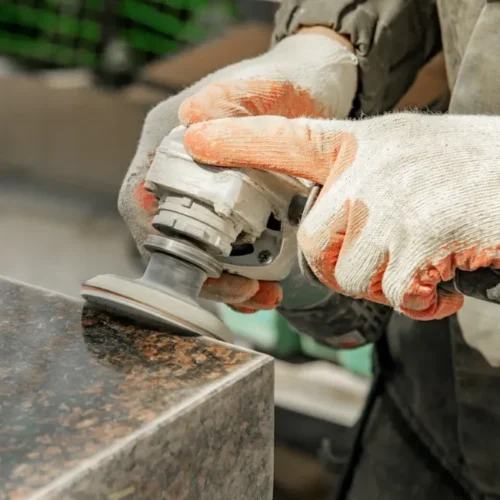
Surface finishing plays an equally important role in determining final product quality. Polishing systems use progressively finer abrasives to refine the stone surface and achieve the desired appearance.
Different finishing techniques produce dramatically different visual effects. Polished finishes maximize reflectivity and color depth. Honed finishes create a softer, matte appearance. Leathered and textured finishes add tactile qualities that appeal to contemporary design trends.
Advancements in polishing technology have improved consistency while reducing labor requirements. Automated polishing lines now process large volumes of material with remarkable efficiency.
For manufacturers serving premium architectural and interior design markets, surface finishing often represents a critical value-added process rather than a simple production step.
Processing Natural Stone vs Engineered Stone
The choice of processing method is increasingly influenced by material type.
Natural stones such as granite and marble exhibit significant variation in hardness, grain structure, and fracture behavior. Fabrication strategies must accommodate these variations to avoid defects and maximize yield.
Engineered materials such as quartz and sintered stone present different challenges. Their uniform composition improves predictability but often increases hardness and tool wear.
Sintered stone, in particular, has become one of the most influential materials in modern fabrication. Its combination of strength, low porosity, UV resistance, and large-format dimensions has created new opportunities while simultaneously demanding more advanced processing technologies.
Waterjet cutting, CNC machining, and specialized tooling have become increasingly important as fabricators adapt to these new materials.
Comparing Processing Methods in Real Manufacturing Environments
No single stone processing method can satisfy every production requirement.
Bridge saws remain highly effective for straight cutting and slab sizing. Waterjet cutting provides unmatched flexibility for complex geometries. CNC machining centers excel at detailing and finishing. Profiling systems optimize edge production. Polishing equipment determines final surface quality.
The most successful stone fabrication facilities do not choose between these technologies. Instead, they combine them strategically.
A countertop project, for example, may begin with slab sizing on a bridge saw, continue with sink cutouts on a waterjet cutting machine, move to a CNC machining center for edge detailing, and finish on a polishing system.
Each process contributes unique strengths that improve overall efficiency and quality.
This integrated approach reflects the reality of modern manufacturing, where competitive advantage increasingly depends on workflow optimization rather than individual machine performance.
Automation and the Future of Stone Processing
Automation is reshaping every aspect of manufacturing, and stone fabrication is no exception.
Labor shortages, rising wages, and increasing customer expectations are driving adoption of automated production systems. Robotic loading systems, automated storage solutions, digital production management software, and intelligent machine controls are becoming standard features in advanced fabrication facilities.
These technologies reduce human error, improve material utilization, and increase throughput while maintaining consistent quality.
Artificial intelligence and machine learning may further transform stone processing in the coming years. Predictive maintenance systems, automated nesting optimization, and intelligent process control algorithms have the potential to improve efficiency beyond what traditional manufacturing approaches can achieve.
As stone products become increasingly customized, digital manufacturing technologies will likely play an even greater role in enabling mass customization without sacrificing productivity.
Choosing the Right Processing Method
Selecting the appropriate stone processing method requires understanding the relationship between design requirements, production volume, material characteristics, and business objectives.
For simple straight cuts and high-volume slab preparation, bridge saws remain highly efficient. For intricate designs, internal cutouts, and custom decorative work, waterjet cutting provides unmatched flexibility. For edge finishing, engraving, and three-dimensional shaping, CNC machining centers offer capabilities that other technologies cannot replicate.
The optimal solution is rarely a single machine or process. Instead, successful manufacturers develop production systems that leverage the strengths of multiple technologies while minimizing their limitations.
This strategic approach enables greater flexibility, higher product quality, and improved profitability.
结论
Stone processing has evolved from a craft-based industry into a sophisticated manufacturing sector driven by technology, automation, and digital design. Modern fabrication facilities rely on a combination of bridge saws, waterjet cutting machines, CNC machining centers, polishing systems, and automated handling equipment to meet increasingly demanding market requirements.
Each processing method offers distinct advantages. Bridge saws deliver productivity for basic cutting operations. Waterjet technology enables unparalleled design freedom and precision. CNC machining centers provide advanced shaping and finishing capabilities. Surface finishing systems determine the visual and tactile qualities that define premium stone products.
The future of stone fabrication will not be shaped by a single technology. Instead, it will be defined by the intelligent integration of multiple processing methods into efficient, automated production ecosystems.
For manufacturers seeking long-term competitiveness, understanding the strengths, limitations, and ideal applications of each stone processing technology is no longer optional. It is a fundamental requirement for success in an industry where quality, customization, and efficiency continue to drive market leadership.