

Introduction
In the modern stone fabrication industry, precision, efficiency, and versatility are crucial factors in determining the right cutting technology. Two of the most prominent methods used in professional stone processing are waterjet cutting machines and stone CNC machining centers. Both technologies are widely adopted in the fabrication of granite, marble, quartz, sintered stone, and other engineered stone materials, yet they operate according to fundamentally different principles and serve distinct roles within the production workflow.
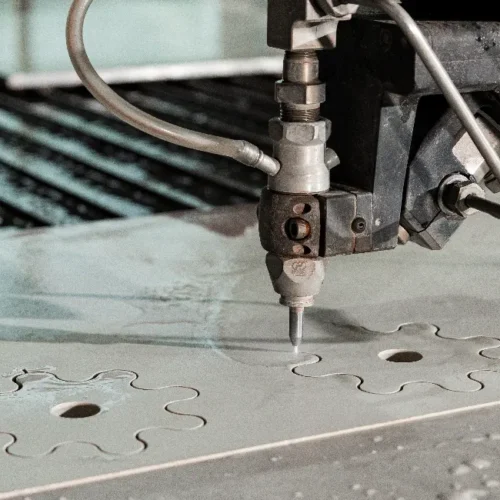
Waterjet cutting machines utilize an ultra-high-pressure stream of water, often combined with abrasive particles, to erode stone materials with remarkable precision. Powered by advanced waterjet pumps capable of delivering pressures exceeding 60,000 psi, these machines can cut complex shapes, intricate curves, and delicate features without generating heat that could compromise the material's integrity. In contrast, stone CNC machining centers rely on computer-controlled rotating tools to physically remove material, shaping slabs into precise forms, producing decorative profiles, engraving surfaces, or carving edge details.
Choosing between these two technologies—or deciding how to integrate both—requires a deep understanding of their capabilities, limitations, and the specific demands of stone fabrication projects. This article explores the critical differences between waterjet cutting machines and stone CNC machining centers, evaluates their respective advantages, and provides insight into when each technology is most suitable, as well as the potential benefits of combining them in a comprehensive stone fabrication workflow.
Understanding Waterjet Cutting Machines
Waterjet cutting machines have revolutionized stone fabrication by providing a cold-cutting solution capable of processing virtually any type of stone without inducing thermal damage. The key feature of a waterjet cutting system is its waterjet pump, which pressurizes water to extremely high levels and directs it through a small orifice to create a focused cutting stream. When abrasive particles are added, this stream becomes capable of cutting through hard materials such as granite, marble, quartz, and sintered stone with exceptional precision.
One of the main advantages of waterjet cutting machines in stone fabrication is their ability to handle intricate shapes, curved patterns, and internal cutouts that are difficult or impossible to achieve with traditional mechanical tools. Waterjet cutting stone is particularly beneficial when working with brittle materials that are prone to chipping, cracking, or delamination. Because the process is entirely cold, no heat-affected zones are created, preserving the stone’s natural coloration, structural integrity, and surface properties.
Another significant benefit of waterjet cutting machines lies in their versatility. A single machine can process multiple types of stone and composite materials with minimal setup changes. This flexibility makes waterjet cutting machines ideal for custom fabrication projects, such as complex countertop designs, decorative inlays, and architectural stone panels. Additionally, modern waterjet systems are compatible with advanced CAD/CAM software, enabling precise control of cutting paths and supporting the production of highly detailed designs directly from digital models.
Understanding Stone CNC Machining Centers
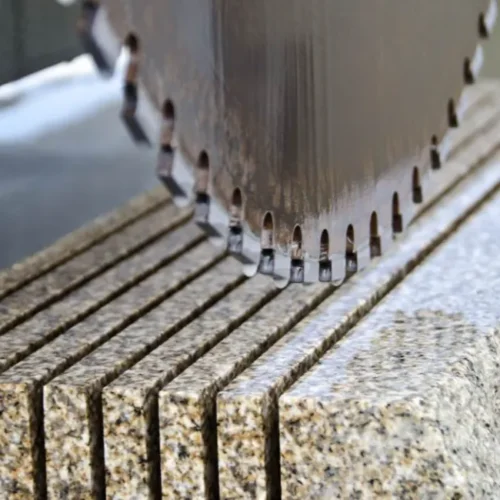
Stone CNC machining centers, on the other hand, operate using a mechanical cutting approach. High-speed rotating tools remove material from stone slabs to produce precise shapes, detailed edge profiles, sink cutouts, and engraved designs. These machines can be configured with multiple spindles, tool changers, and advanced software to handle complex three-dimensional shapes and decorative patterns.
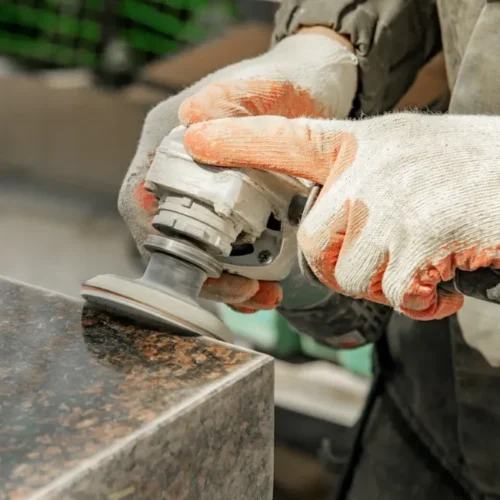
CNC machining centers are particularly effective for producing uniform, repeatable edge details and decorative finishes that require consistent tool engagement across multiple pieces. They excel in producing three-dimensional contours, deep pockets, chamfers, beveled edges, and polished profiles. For countertop fabrication, CNC machining centers are commonly used to finish edges, create integrated sink areas, and add detailed surface engraving, complementing the initial slab cutting process performed by other technologies.
While CNC machines can work with a variety of stone materials, they have inherent limitations when cutting very hard or brittle stones, especially for intricate internal cutouts or highly irregular geometries. Tool wear, cooling requirements, and mechanical stress can become significant factors, affecting both quality and operating costs. Nevertheless, CNC machining centers remain indispensable for applications that require highly detailed surface work and three-dimensional shaping of stone elements.
Key Differences Between Waterjet Cutting Machines and Stone CNC Machining Centers
The most fundamental difference between these technologies lies in the method of material removal. Waterjet cutting machines employ a non-contact, high-pressure abrasive water stream to erode material, ensuring minimal mechanical stress on the stone. CNC machining centers, by contrast, rely on direct contact between rotating tools and the stone, which can generate heat, vibration, and mechanical forces that may impact the stone’s integrity.
Because of this difference, waterjet cutting machines are particularly suited for delicate, brittle, or composite stone materials where preserving structural and aesthetic properties is critical. CNC machining centers are better suited for detailed surface finishing, edge profiling, and three-dimensional shaping where mechanical contact allows for precise and repeatable contours.
Waterjet cutting stone is also distinguished by its ability to produce smooth edges and complex shapes without secondary finishing in many cases. CNC machining centers, while capable of excellent precision, often require multiple tools and passes to achieve similar edge quality, particularly on very hard stone surfaces.
Material Versatility and Applications
Waterjet cutting machines offer superior material versatility. They can cut granite, marble, quartz, sintered stone, and composite materials without altering cutting parameters drastically. This makes waterjet systems highly effective for custom stone fabrication projects, where multiple materials and complex designs are common. Waterjet pumps provide the consistent pressure and flow needed to maintain high-quality cuts across varying stone thicknesses and densities.
CNC machining centers, though capable of processing many types of stone, often require specialized tooling and adjustments to accommodate different material hardness and surface properties. Edge finishing, decorative profiles, and engraving operations demand precise tool selection and speed adjustments to achieve optimal results. Despite these limitations, CNC machines excel when consistent, repeatable precision is required across multiple units, such as in large countertop production runs or standardized architectural components.
When to Use Waterjet Cutting Machines
Waterjet cutting machines are ideal for scenarios where complex shapes, intricate cutouts, and minimal material stress are required. Applications include cutting countertop slabs with irregular sink openings, decorative stone inlays, architectural panels with curved or non-standard profiles, and highly brittle or composite materials. The cold-cutting nature ensures that the natural beauty and structural integrity of the stone remain intact, which is particularly important in premium granite and sintered stone fabrication.
For stone fabrication companies, a waterjet cutting machine provides a flexible solution capable of handling diverse projects without the need for extensive tooling changes. This flexibility, combined with precision and edge quality, positions waterjet technology as a central tool in modern custom stone workshops.
When to Use Stone CNC Machining Centers
Stone CNC machining centers are most suitable for detailed finishing operations, repetitive edge profiling, engraving, and three-dimensional shaping. When high repeatability and precise dimensional control are required, CNC machines offer significant advantages. They are particularly effective in applications involving standard countertop edges, decorative moldings, sink installations, and engraved branding or artwork on stone surfaces.
While they may not be the best solution for highly brittle or irregular cutouts, CNC machining centers provide the consistency and precision necessary for production environments where multiple identical components must be manufactured efficiently.
Combining Waterjet Cutting Machines and Stone CNC Machining Centers
In practice, many advanced stone fabrication facilities integrate both waterjet cutting machines and CNC machining centers to maximize production efficiency and quality. Waterjet cutting machines perform the initial slab shaping, complex cutouts, and intricate profiles, while CNC machining centers handle edge finishing, polishing, and detailed surface work. This complementary approach leverages the strengths of both technologies, minimizes their respective limitations, and allows stone fabricators to achieve superior results with higher throughput.
The combination also provides flexibility for projects involving multiple stone types and complex designs. By using waterjet cutting stone technology for rough and detailed cuts, and CNC machining centers for finishing, fabricators can produce high-quality countertops, architectural panels, and decorative stone pieces with exceptional precision and minimal material waste.
结论
Waterjet cutting machines and stone CNC machining centers each play a critical role in modern stone fabrication. Waterjet technology excels in processing brittle, composite, or hard stone materials with intricate designs and minimal stress, while CNC machining centers provide precise finishing, detailed edge profiling, and three-dimensional shaping. For stone fabrication companies, particularly those producing granite, marble, quartz, or sintered stone products, integrating both technologies offers the most efficient and flexible solution.
By understanding the differences, advantages, and ideal applications of each technology, stone fabricators can optimize production workflows, maintain high material quality, and meet the increasingly complex demands of architectural, commercial, and residential stone projects. Combining waterjet cutting machines with stone CNC machining centers ensures that projects benefit from both precision cutting and detailed finishing, enabling fabricators to deliver superior products and maintain a competitive edge in the market.