







Introduction: The Rise of Sintered Stone in Modern Architecture
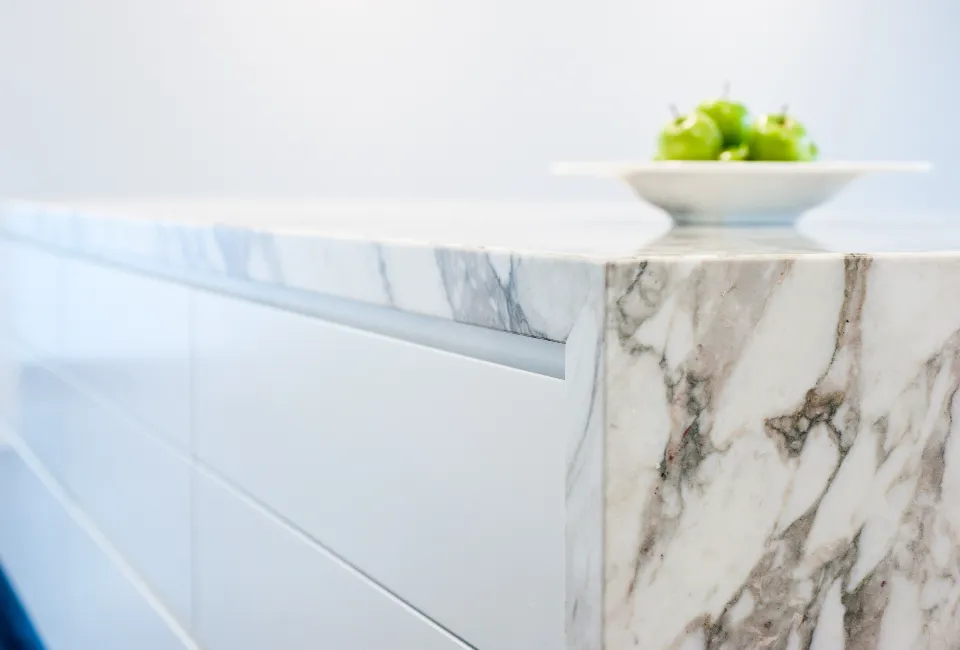
Sintered stone, also known as ultra-compact stone or large-format engineered stone, has become a material of choice in contemporary architecture and interior design. Its combination of durability, aesthetic versatility, and minimal maintenance requirements has led to widespread adoption in countertops, wall cladding, flooring, and facades. However, the very properties that make sintered stone desirable—extreme hardness, resistance to scratching, and thermal stability—also create significant challenges for processing. Traditional cutting methods such as diamond blade saws, CNC routers, or laser cutting often struggle to maintain precision, generate micro-cracks, or require extensive post-processing. Within this context, waterjet cutting technology has emerged as a solution uniquely suited to address the complexities of sintered stone fabrication, providing both technical and operational advantages that few other methods can match.
Precision and Edge Quality: Maintaining Material Integrity
One of the foremost reasons waterjet cutting excels in sintered stone processing is its ability to maintain structural integrity while achieving precise cuts. Unlike mechanical cutting tools that exert significant pressure on the material, waterjet cutting utilizes a high-velocity water stream mixed with abrasive particles to erode material gradually along the desired cutting path. This cold-cutting process eliminates the risk of thermal damage, which can lead to micro-fractures, discoloration, or altered physical properties in heat-sensitive stone surfaces.
The high controllability of waterjet cutting allows manufacturers to achieve complex internal cutouts, tight radii, and intricate decorative patterns with minimal chipping. In comparison, diamond saws or CNC routers may produce minor edge breakage on corners or thin sections, particularly in ultra-large slabs exceeding 3 meters in length. Waterjet cutting ensures that edges remain sharp and precise, even when processing sintered stone with variable thicknesses and densities, making it indispensable for applications where surface finish and dimensional accuracy are critical.
Handling Large Format Slabs: Reduced Mechanical Stress
Modern architectural designs increasingly incorporate large-format sintered stone slabs, sometimes exceeding 3200 x 1600 mm. Handling these oversized panels poses challenges for conventional cutting methods, as the weight and rigidity of the material can induce mechanical stress during sawing or routing. Waterjet cutting alleviates this problem because it is a non-contact process; the cutting stream applies minimal physical force to the slab. As a result, waterjet machines can process even the largest slabs without the risk of bowing, cracking, or panel deformation.
This non-contact nature also reduces the likelihood of vibration-induced micro-cracks. High-speed rotary cutting tools, particularly those without sufficient support, can transmit mechanical vibrations through the slab, compromising both the surface and the underlying structure. Waterjet cutting, in contrast, produces virtually no mechanical stress, preserving the integrity of the entire slab and enabling manufacturers to achieve consistent quality across large panels with minimal waste.
Complex Contours and Inlaid Designs: Achieving High Flexibility
Architectural projects increasingly demand complex geometric designs, such as organic curves, non-standard angles, and intricate inlays. Traditional cutting methods struggle to achieve this level of flexibility without extensive programming, custom tooling, or post-processing. Waterjet cutting systems, however, provide unparalleled versatility in generating complex contours.
The combination of CNC control and precise motion systems allows waterjet machines to follow highly intricate paths with sub-millimeter accuracy. Decorative inlays, multi-layered designs, and nested patterns can be executed directly from CAD or CAM files without requiring multiple tools or manual intervention. This capability is particularly valuable in high-end projects where aesthetic quality is as important as structural performance. Furthermore, waterjet cutting enables manufacturers to integrate multi-material inlays—such as embedding glass, metal, or other engineered stones—directly into sintered stone slabs, further expanding design possibilities.
Surface Preservation: Minimizing Finishing Requirements
Sintered stone is valued for its smooth surface, uniform color, and natural appearance. However, traditional cutting processes often necessitate secondary finishing operations, such as polishing, edge grinding, or chamfering, to restore surface quality. These operations not only increase production time but also introduce additional costs and material loss.
Waterjet cutting preserves the original surface quality by producing smooth edges with minimal chipping. The abrasive stream removes material gradually, avoiding surface micro-damage while producing clean cuts suitable for installation with minimal finishing. For thin slabs or delicate designs, this characteristic is crucial; it enables manufacturers to reduce labor-intensive polishing steps and achieve higher throughput without sacrificing quality.
Material Waste Reduction: Maximizing Yield
Waste management is a critical consideration in sintered stone fabrication, as large-format slabs are expensive, and offcuts can significantly impact production costs. Waterjet cutting offers high material yield due to its ability to perform precise nesting and contouring. Modern waterjet CNC software allows manufacturers to optimize the layout of multiple pieces on a single slab, minimizing kerf loss and reducing offcut waste.
Moreover, waterjet systems can process multiple internal features without additional tool changes or manual handling, further preserving the usable area of each slab. In contrast, mechanical cutting often requires excess material around corners or internal cutouts to prevent tool breakage or chipping, resulting in higher waste.
Safety and Operational Efficiency
Processing large, hard slabs presents inherent safety risks, including blade breakage, dust generation, and physical strain during material handling. Waterjet cutting improves operational safety in several ways. First, the process is non-contact, reducing the risk of sudden tool failures that could cause injury. Second, waterjet cutting produces minimal dust compared with sawing or routing, which is critical in enclosed workshops or in environments with strict air quality regulations.
Additionally, waterjet systems often incorporate automated features such as abrasive feeding, gantry movement, and material positioning. These capabilities reduce manual labor, minimize human error, and increase overall throughput. Operators can focus on monitoring and quality control rather than physically manipulating heavy slabs or replacing worn tooling, enhancing both safety and productivity.
Adaptability to Different Materials and Finishes
Although sintered stone is the focus, architectural projects frequently involve composite assemblies or mixed materials. Waterjet cutting machines can handle multiple materials without changing the core setup. For example, the same system can cut engineered stone, natural stone, glass, ceramics, or thin metals used as inserts. This adaptability allows manufacturers to standardize production equipment while accommodating diverse client requirements.
Furthermore, waterjet systems can be tuned to achieve specific edge finishes, such as matte, honed, or beveled edges, simply by adjusting cutting parameters. This flexibility eliminates the need for multiple finishing tools and provides designers with greater freedom to achieve the desired aesthetic effect directly from the cutting stage.
Integration with Digital Fabrication Workflows
Modern sintered stone fabrication increasingly relies on digital design and production workflows. Waterjet cutting machines seamlessly integrate with CAD and CAM software, enabling automated translation of design files into precise cutting operations. This digital integration ensures high accuracy, repeatability, and traceability throughout production.
By connecting waterjet systems to factory management software, manufacturers can schedule production, monitor machine utilization, and track material consumption in real time. This level of integration supports lean manufacturing practices, reduces bottlenecks, and allows factories to scale operations without compromising quality.
Conclusion: Waterjet Cutting as the Strategic Choice
The unique combination of precision, versatility, and material preservation makes waterjet cutting the optimal solution for sintered stone processing. Its ability to cut large-format slabs with minimal mechanical stress, achieve complex contours, maintain surface integrity, and reduce waste distinguishes it from traditional cutting methods. Moreover, waterjet cutting supports diverse design requirements, integrates seamlessly with digital workflows, and enhances both operational efficiency and workplace safety.
For fabricators aiming to meet the high demands of modern architecture and interior design, investing in waterjet cutting technology is not merely an operational choice—it is a strategic decision that ensures consistent quality, maximizes material yield, and expands creative possibilities. As sintered stone continues to grow in popularity, waterjet cutting stands out as the most effective, reliable, and adaptable method for transforming these advanced materials into high-quality finished products.